St. Thomas Aquinas
A Soulify guide to St. Thomas Aquinas · Christian Thinkers
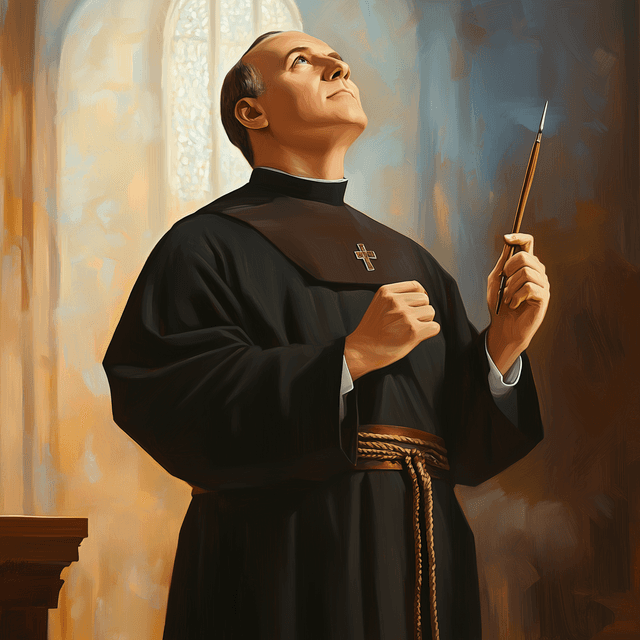
Overview
St. Thomas Aquinas (1225-1274) stands as one of the most influential philosophers and theologians in Christian history. Born to noble parents near Aquino, Italy, he defied his family's wishes by joining the Dominican Order. Despite being nicknamed the "Dumb Ox" for his quiet demeanor as a student, his brilliant intellect soon became apparent under the tutelage of St. Albert the Great. He revolutionized Catholic theology by synthesizing Aristotelian philosophy with Christian doctrine in his masterwork, the "Summa Theologica." His writings harmonized faith and reason, establishing a philosophical framework that continues to influence Catholic thought. A mystic as well as a scholar, he stopped writing after experiencing a profound vision near the end of his life, declaring that "all that I have written seems like straw compared to what has been revealed to me."
Key Facts
- Feast Day:
- January 28 (formerly March 7)
- Patron Of:
- Catholic universities, schools, students, theologians, philosophers, booksellers, pencil makers
- Born:
- January 28, 1225, Roccasecca, Kingdom of Sicily
- Died:
- March 7, 1274, Fossanova Abbey, Papal States
- Attributes:
- Dominican habit, sun on chest, Eucharist, book, quill, dove, ox
- Canonized:
- July 18, 1323, by Pope John XXII (declared Doctor of the Church, 1567, and patron of Catholic schools, 1880)
Known For
- Composing the Office for Corpus Christi feast
- Defending the mendicant orders against critics
- Synthesizing Aristotelian philosophy with Christian theology
- Establishing natural law theory in Catholic thought
- Creating systematic theological education methods
- Developing the Five Ways to prove God's existence
- Writing the Summa Theologica and Summa Contra Gentiles
- Pioneering scholastic philosophy and methodology
Prayer & reflection with St. Thomas Aquinas
Grant me, O Lord my God, a mind to know you, a heart to seek you, wisdom to find you, conduct pleasing to you, faithful perseverance in waiting for you, and a hope of finally embracing you. May I always hunger for him who is the bread of angels, the refreshment of holy souls, our daily and supersubstantial bread, having all sweetness and savor, and every delight of taste. May my heart ever hunger for and feed upon him, upon whom the angels desire to look, and may my inmost soul be filled with the sweetness of his savor. May I thirst for him who is the fountain of life, the fountain of wisdom and knowledge, the fountain of eternal light, the torrent of pleasure, the richness of the house of God. Amen.
Miracles & tradition
Devotional accounts are presented as part of Christian tradition. Historical evidence and formal Church recognition vary by account.
The Miraculous Belt
After angels girded him with a mystical cord of purity following his imprisonment by his family, he was forever freed from temptation, a miracle attested by his extraordinary focus on spiritual matters.
The Levitating Saint
While praying before the crucifix at the Dominican convent of Naples, witnesses saw him levitate several feet off the ground, and heard Christ's voice say, "You have written well of me, Thomas."
The Incorrupt Body
When his body was transferred to Toulouse in 1369, it was found to be incorrupt, and his Dominican habit still fresh, with a sweet odor emanating from his remains.
Legacy & Spiritual Impact
- His principles shape Catholic moral theology
- His work influences interfaith dialogue
- His writings influence modern natural law theory
- His methods revolutionized theological education
- His teachings inform Catholic social doctrine
- His synthesis of faith and reason guides Catholic education
- His philosophical system (Thomism) remains central to Catholic thought
- His Eucharistic hymns are used in liturgical worship
The Soulify companion is an AI learning experience inspired by St. Thomas Aquinas, not the historical person or an authoritative source of Church teaching.