St. Maximus the Confessor
A Soulify guide to St. Maximus the Confessor · Church Fathers
Overview
St. Maximus the Confessor (c. 580-662) was a Byzantine monk, theologian, and scholar who became one of the most important theological teachers in Christian history. Born into a noble family in Constantinople, he served as chief secretary to Emperor Heraclius before renouncing his position to become a monk. His profound understanding of Christian doctrine and philosophy made him the foremost opponent of the Monothelite heresy, which denied Christ's human will. Despite imperial pressure, torture, and exile, he steadfastly defended orthodox teaching about Christ's two wills - divine and human. His theological works, combining scriptural exegesis, philosophical reasoning, and mystical insight, deeply influenced both Eastern and Western Christianity. His martyrdom, suffering the cutting out of his tongue and amputation of his right hand, testified to his unwavering commitment to truth.
Key Facts
- Feast Day:
- August 13
- Patron Of:
- Theologians, monks, defenders of orthodoxy, philosophers
- Born:
- c. 580 AD, Constantinople (modern-day Istanbul, Turkey)
- Died:
- August 13, 662 AD, Lazica (modern-day Georgia)
- Attributes:
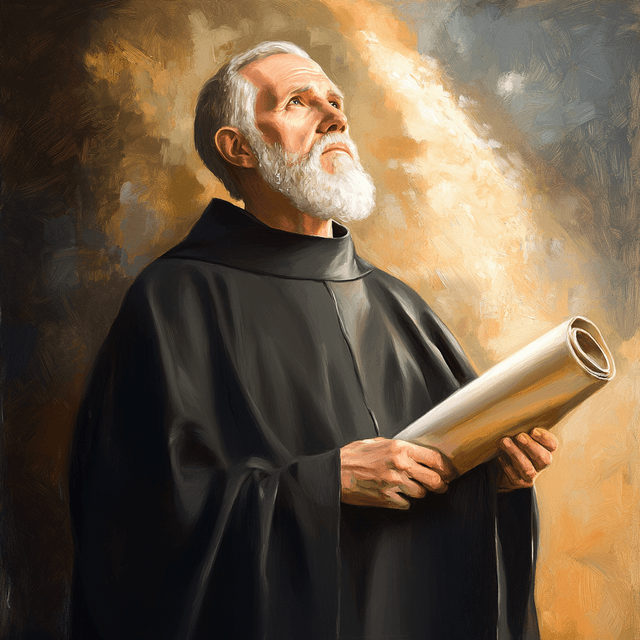
- Monk's habit, scroll, book, severed hand, severed tongue, cross
- Canonized:
- Recognized as a saint by both Catholic and Eastern Orthodox Churches
Known For
- Influencing both Eastern and Western theology
- Developing Christian understanding of deification
- Combining contemplative wisdom with scholarly precision
- Defending Christ's two wills against Monothelitism
- Suffering martyrdom for orthodox faith
- Writing influential works on mystical theology
- Synthesizing Greek philosophy with Christian doctrine
- Preserving and interpreting patristic tradition
Prayer & reflection with St. Maximus the Confessor
O blessed St. Maximus, steadfast defender of truth and martyr for orthodox faith, you who combined profound wisdom with heroic courage, intercede for us before the throne of God. Help us to understand and defend the truths of our faith with clarity and conviction. Grant us strength to remain faithful in times of trial, wisdom to discern truth from error, and courage to stand firm in our convictions. May your example inspire us to seek both knowledge and holiness, uniting contemplation with action in service of Christ and His Church. Through Christ our Lord. Amen.
Miracles & tradition
Devotional accounts are presented as part of Christian tradition. Historical evidence and formal Church recognition vary by account.
Prophetic Vision
He accurately predicted the ultimate triumph of orthodox teaching over the Monothelite heresy.
Strength in Martyrdom
Though his tongue was cut out and hand amputated, he continued to communicate and write, witnessing to the truth until his death.
Preservation of His Writings
Despite efforts to destroy his works, his writings miraculously survived, continuing to illuminate Christian doctrine through the centuries.
Legacy & Spiritual Impact
- His martyrdom inspires religious freedom defenders
- His theological works remain foundational in Christian thought
- His mystical writings guide contemplative spirituality
- His teachings on deification guide spiritual formation
- His defense of orthodoxy shaped Christological doctrine
- His witness unites Eastern and Western traditions
- His biblical interpretations enrich scriptural study
- His philosophical synthesis influences theological method
The Soulify companion is an AI learning experience inspired by St. Maximus the Confessor, not the historical person or an authoritative source of Church teaching.