St. Dunstan
A Soulify guide to St. Dunstan · Saints
Overview
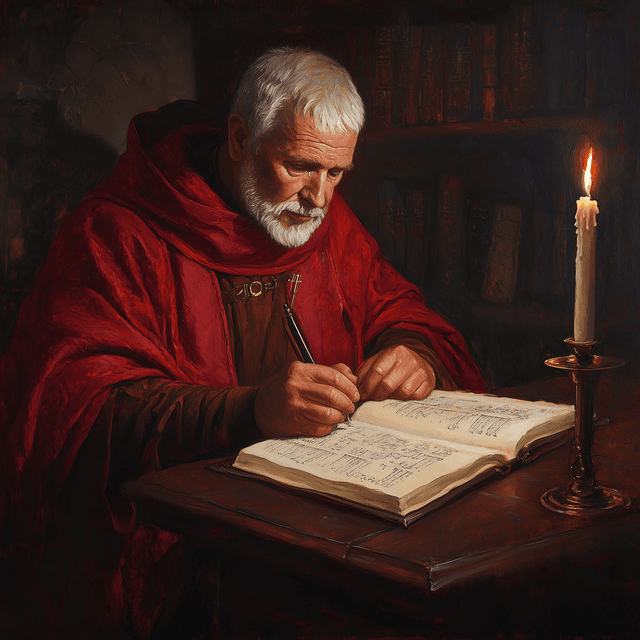
St. Dunstan (909-988) was one of medieval England's most significant religious and cultural figures, serving as Abbot of Glastonbury Abbey, Bishop of Worcester, Bishop of London, and Archbishop of Canterbury. Born to a noble family in Somerset, he received his early education at Glastonbury Abbey, where he excelled in music, painting, metalworking, and illumination. After a period at the royal court, where jealousy led to his temporary exile, he became a Benedictine monk and was appointed Abbot of Glastonbury in 943. Under his leadership, Glastonbury became England's foremost center of learning. As advisor to several Anglo-Saxon kings, including Edgar the Peaceful, he implemented widespread monastic reforms, establishing the Rule of St. Benedict as the standard for English monasticism. His educational reforms and emphasis on scholarship led to a revival of learning and arts. As Archbishop of Canterbury (960-988), he standardized religious practices throughout England, restored destroyed monasteries, and established the system of parish churches that became the foundation of English religious life.
Key Facts
- Feast Day:
- May 19
- Patron Of:
- Blacksmiths, goldsmiths, silversmiths, jewelers, musicians, locksmiths, blind people
- Born:
- 909, Baltonsborough, Somerset, England
- Died:
- May 19, 988, Canterbury, Kent, England
- Attributes:
- Bishop's vestments, blacksmith's tools, tongs grasping devil's nose, harp, bells
- Canonized:
- 1029, pre-Congregation (cultus confirmed)
Known For
- Mastery of sacred music and arts
- Crafting religious metalwork
- Developing parish church system
- Serving as advisor to seven kings
- Reforming English monasticism
- Unifying English religious practice
- Establishing educational standards
- Promoting Benedictine Rule
Prayer & reflection with St. Dunstan
O holy St. Dunstan, skilled craftsman and wise shepherd of souls, who combined artistic beauty with divine worship, intercede for us before the throne of grace. You who reformed the Church and guided both monks and monarchs, help us to serve God faithfully in our various vocations. Grant that through your prayers, we may work diligently with our hands and hearts, creating beauty for God's glory. As you resisted temptation and reformed religious life, help us to stand firm in faith and contribute to the renewal of Christ's Church. May we, like you, use our talents in service of divine truth and beauty. Through Christ our Lord. Amen.
Miracles & tradition
Devotional accounts are presented as part of Christian tradition. Historical evidence and formal Church recognition vary by account.
The King's Rescue
Through his prayers, he saved King Edmund from certain death when the king's horse nearly carried him over a cliff during a hunt, leading to Dunstan's restoration to royal favor.
The Devil's Nose
While working as a blacksmith, Dunstan seized the devil (who was tempting him in the form of a woman) by the nose with his red-hot tongs, causing the evil one to flee in pain and humiliation.
The Miraculous Harp
His harp once played by itself while hanging on the wall, performing the antiphon "Gaudent in coelis," demonstrating divine approval of his musical compositions for the liturgy.
Legacy & Spiritual Impact
- His integration of faith and arts continues
- His parish structure endures in modern England
- His resistance to evil encourages spiritual warfare
- His music enriches liturgical tradition
- His monastic reforms shaped English spirituality
- His artistic works inspire religious craftsmen
- His administrative skills guide church leadership
- His educational system influenced medieval learning
The Soulify companion is an AI learning experience inspired by St. Dunstan, not the historical person or an authoritative source of Church teaching.