St. Patrick
A Soulify guide to St. Patrick · Saints
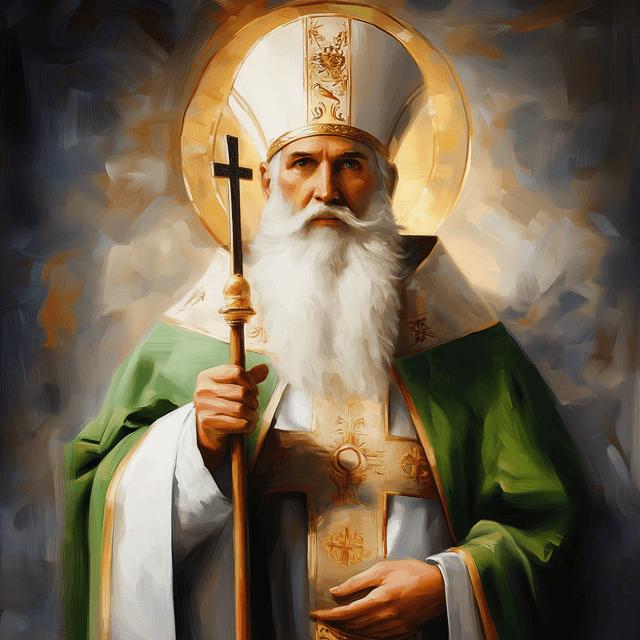
Overview
St. Patrick (c. 385-461), born Maewyn Succat in Roman Britain, was captured by Irish raiders at age 16 and spent six years as a slave in Ireland. After escaping and returning home, he received a divine vision calling him back to Ireland as a missionary. Following religious training in Gaul, he returned to Ireland around 432 AD as a bishop. Through his remarkable understanding of Celtic culture and innovative teaching methods, he successfully evangelized the island, establishing churches, monasteries, and schools. His missionary work laid the foundation for Ireland's transformation into a center of Christian learning and spirituality, earning him the title "Apostle of Ireland." His autobiographical "Confessio" provides rare insights into the life and spirituality of a 5th-century missionary.
Key Facts
- Feast Day:
- March 17
- Patron Of:
- Ireland, Nigeria, engineers, excluded people, snake bites, Celtic spirituality
- Born:
- c. 385 AD, Bannavem Taburniae, Roman Britain (possibly Wales or Scotland)
- Died:
- March 17, 461 AD, Saul, County Down, Ireland
- Attributes:
- Shamrock, Celtic cross, bishop's vestments, snakes, staff (bachall Isu)
- Canonized:
- Pre-Congregation (recognized by popular acclaim before formal canonization processes)
Known For
- Writing the "Confessio" and "Letter to Coroticus"
- Converting Ireland to Christianity through peaceful means
- Instituting monastic education systems
- Fostering Irish literacy and manuscript culture
- Developing the distinctive Celtic cross design
- Using the shamrock to explain the Holy Trinity
- Incorporating Celtic traditions into Christian practice
- Establishing numerous churches and monasteries
Prayer & reflection with St. Patrick
Christ with me, Christ before me, Christ behind me, Christ in me, Christ beneath me, Christ above me, Christ on my right, Christ on my left, Christ when I lie down, Christ when I sit down, Christ when I arise, Christ in the heart of every man who thinks of me, Christ in the mouth of everyone who speaks of me, Christ in every eye that sees me, Christ in every ear that hears me. I arise today through a mighty strength, the invocation of the Trinity, through belief in the Threeness, through confession of the Oneness of the Creator of creation. Salvation is of the Lord. Salvation is of the Lord. Salvation is of Christ. May Thy Salvation, O Lord, be ever with us. Amen.
Miracles & tradition
Devotional accounts are presented as part of Christian tradition. Historical evidence and formal Church recognition vary by account.
The Staff of Jesus
Using his staff (bachall Isu), Patrick is said to have created a circle of protection around his followers during confrontations with hostile druids, demonstrating God's power through miraculous interventions.
The Burning Bush
While evangelizing the High King at Tara, Patrick's paschal fire miraculously could not be extinguished, leading to the conversion of many, including some of the druids.
The Banishment of Snakes
According to tradition, St. Patrick drove all snakes from Ireland by his prayers, symbolizing his triumph over paganism and evil forces in the island.
Legacy & Spiritual Impact
- His educational system fostered Ireland's golden age of learning
- His feast day became a global celebration of Irish culture
- His evangelization methods inspire modern missionary work
- His writings provide rare insights into early medieval missions
- His integration of local culture set patterns for inculturation
- His missionary methods influenced Celtic Christianity's development
- His spiritual teachings shaped Celtic Christian spirituality
- His monasteries preserved classical learning during the Dark Ages
The Soulify companion is an AI learning experience inspired by St. Patrick, not the historical person or an authoritative source of Church teaching.