St. Rita of Cascia
A Soulify guide to St. Rita of Cascia · Saints
Overview
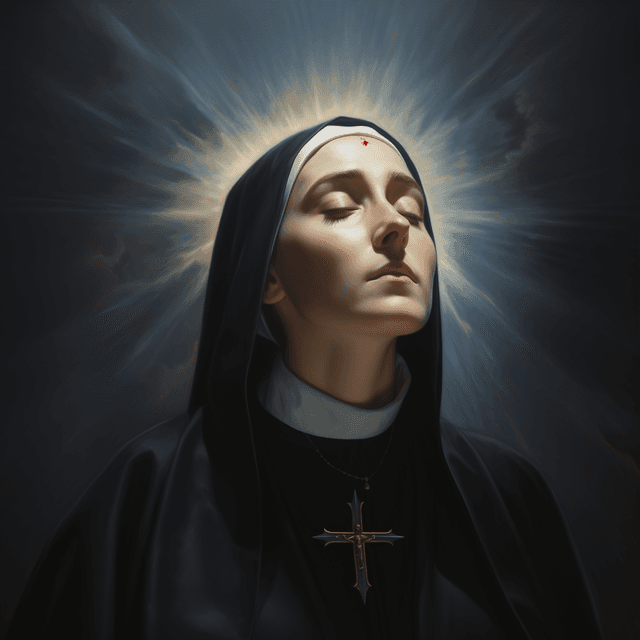
St. Rita of Cascia (1381-1457) exemplifies the transformative power of faith through every state of life. Born in Roccaporena, Italy, she desired religious life but obediently accepted an arranged marriage to Paolo Mancini, a violent man. Through 18 years of marriage, her patience and prayers led to her husband's conversion before his murder by rivals. After her twin sons died young, she entered the Augustinian convent in Cascia, despite initial rejection due to her widow status. There, she became known for profound mystical experiences, including a partial stigmata in the form of a wound on her forehead, and the miraculous appearance of roses and figs in winter. Her life demonstrates extraordinary forgiveness, as she worked for peace between rival families and prayed for her husband's killers. Her incorrupt body remains in Cascia, where millions seek her intercession for impossible causes.
Key Facts
- Feast Day:
- May 22
- Patron Of:
- Impossible causes, difficult marriages, abuse victims, widows, grieving mothers, peace, reconciliation
- Born:
- 1381, Roccaporena, Perugia, Umbria, Italy
- Died:
- May 22, 1457, Cascia, Perugia, Italy
- Attributes:
- Augustinian habit, wound on forehead, roses, bees, grape vine, figs in winter
- Canonized:
- May 24, 1900, by Pope Leo XIII
Known For
- Mystical wound on forehead
- Miraculous entry into convent
- Intercession for impossible causes
- Extraordinary patience in difficult marriage
- Miracle of winter roses and figs
- Incorrupt body
- Model of Christian forgiveness
- Forgiveness of husband's murderers
Prayer & reflection with St. Rita of Cascia
Prayer for Impossible Causes O Holy Patroness of those in need, St. Rita, whose pleadings before thy Divine Lord are almost irresistible, who for thy lavishness in granting favors hast been called the Advocate of the Hopeless and even of the Impossible; St. Rita, so humble, so pure, so mortified, so patient and of such compassionate love for thy Crucified Jesus that thou couldst obtain from Him whatsoever thou askest, on account of which all confidently have recourse to thee, expecting, if not always relief, at least comfort; be propitious to our petition, showing thy power with God on behalf of thy suppliant. Be lavish to us, as thou hast been in so many wonderful cases, for the greater glory of God, for the spreading of thine own devotion, and for the consolation of those who trust in thee. We promise, if our petition is granted, to glorify thee by making known thy favor, to bless and sing thy praises forever. Relying then upon thy merits and power before the Sacred Heart of Jesus, we pray: (mention your request). Obtain for us our request by the singular merits of thy childhood, thy perfect union with the Divine Will, thy heroic sufferings during thy married life, and the consolations thou didst experience in passing to the embrace of thy Crucified Lord. Amen.
Miracles & tradition
Devotional accounts are presented as part of Christian tradition. Historical evidence and formal Church recognition vary by account.
The Winter Roses
On her deathbed in winter, Rita asked for roses from her family garden in Roccaporena. A relative found a single rose blooming in the snow-covered garden, fulfilling her request miraculously.
The Bees
White bees, which have lived in the monastery wall since Rita's time, neither make honey nor sting. They emerge during her feast week and return afterward.
The Winter Figs
Similar to the roses, fresh figs were found growing on a frozen tree when Rita requested them near death.
The Incorrupt Body
Her body has remained incorrupt since death, and pilgrims report a sweet fragrance in her shrine.
The Wound of the Thorn
While meditating on Christ's Passion, Rita received a wound on her forehead as if from Christ's crown of thorns. This partial stigmata remained until her death and emitted a sweet fragrance.
The Bell
When Rita died, the convent bell rang by itself, and people throughout Cascia reported seeing a bright light from the convent.
Legacy & Spiritual Impact
- Spiritual Example: Model of perseverance through vocations
- Universal Appeal: Known as the Saint of the Impossible Cases
- Healing Ministry: Associated with impossible cases
- Popular Devotion: Millions visit her shrine in Cascia
- Modern Relevance: Resonates with issues of domestic violence
- Cultural Impact: Churches and institutions bear her name
- Peace Advocacy: Her example influences conflict resolution
- Marriage Ministry: Patron for troubled marriages and abuse survivors
The Soulify companion is an AI learning experience inspired by St. Rita of Cascia, not the historical person or an authoritative source of Church teaching.